


How Do You Prepare For LASIK Surgery?
The most challenging step that you will take before having LASIK in Los Angeles is finding the appropriate clinic with the most sophisticated technology and the best Lasik eye surgery. This is the most crucial aspect that ascertains the quality of the surgery you are going to undergo.
Also, it really helps to establish how smooth your recovery will go and guarantees you achieve optimal vision from laser vision correction.

When you have chosen LASIK for your corrective eye surgery, your eye doctor has conducted a baseline evaluation to find out if you are a good candidate for the procedure, then you can prepare for the surgery.
Doctor Moosa, the eye surgeon at Excel Laser Vision Institute, believes that if a patient prepares well for surgery, there is a higher probability they will be in a better condition for the procedure.
The LASIK clinic has several years of experience preparing patients for LASIK surgery under their belts, and they have some tips below to help you prepare for the procedure.
Take a look at the best way to be ready for LASIK surgery here:
Drink Plenty Of Water Before The Procedure
This tip is true for any procedure you go through. It is crucial that you drink more water unless your doctor tells you not to. When you undergo a LASIK procedure, you are doing more good than harm by stepping up your water intake. Increasing your water intake will help you to maintain hydration and encourage the healing process after your procedure.
The most common side effect of LASIK eye surgery is temporary dry eye. Drinking more water is an easy way to keep your eyes lubricated.
If you have already booked your LASIK procedure, do not want any longer to start increasing your water intake. You want to set a target of at least 8 eight-ounce glasses of water per day. It sounds like a massive of water to consume, but it is the basic minimum you should be drinking to maintain sufficient hydration.
If you are determined to drink more water but you are apprehensive about keeping track, there are apps available to help you oversee your water intake, let you know when it is time to fill up your glass, or help to calculate your body’s optimal water intake.
If you have any questions or concerns regarding your water intake before your LASIK procedure, do not hesitate to talk to Dr. Ferzaad Moosa and his experienced team.
Stop Wearing Contact Lenses When Instructed To
Before your LASIK procedure, your eye surgeon will advise you to stop contact lens use for at least one week for soft contacts and one month for hard contacts. The reason for discontinuing contacts prior to LASIK surgery is because wearing contacts can change the shape of your cornea and affect the results of your LASIK procedure.
Also, it is a good idea to give your eyes a rest, i.e., switch to eyeglasses for a while before your surgery.
When to stop wearing contacts is a significant conversation that you should have with your eye doctor. Your eye doctor will recommend how long before your procedure you should stop using contact lens based on your eye evaluation.
Get A Comfortable Outfit Prepared
Your outfit on the day of your LASIK surgery matters a lot. You will be awake during the LASIK procedure, so it is essential to be wearing comfortable clothing. Choose loose clothes that you can easily take off when you get back home.
Comfortable clothing such as leggings, athletic shorts, a zipper hoodie, or a soft t-shirt is suitable. When you receive LASIK, the first thing you want to do when you arrive home is sleep. It is simpler to rest at home when you are wearing clothes that you can rest in or easily get out of.
Plus, try not to wear clothes that produce lint. So, avoid clothing items such as faux fur or anything that could be shed. This is important because you keep contaminants out of the operating room. LASIK is a safe and sterile procedure, so make the extra effort to avoid bringing unnecessary contaminants.
Designate A Driver
During LASIK, the patient is not put to sleep. Instead of this, numbing eye drops are put in the eyes. If you are nervous about the procedure, you may get medication to help you relax.
The purpose of numbing eye drops is to make certain you don’t feel any pain when undergoing LASIK. These drops wear off after a few hours once the procedure is over.
Even though the patient is not put under during LASIK, you are not allowed to drive yourself home afterward. You should have a family member or friend drive you to the procedure and back home again.
Most LASIK patients are told by their eye doctors that they are good to drive during their follow-up appointment the next day. When you get cleared by your eye doctor, then you can safely be back behind the wheel.
Go Through Your Paperwork
The team at Excel Institute will give you a LASIK consent form before you go for your procedure. You should read your paperwork thoroughly, and ask any questions you have regarding your LASIK procedure. You should have peace of mind that you are making an informed decision about the procedure ahead.
On The Big Day, Do Not Wear Any Perfume, Lotions, Or Makeup
On the day of your LASIK procedure, do not apply heavy makeup, perfumes, or lotions. If possible, go as bare as you can. You should take a shower and make sure your face is clean of any contaminants the morning of the LASIK. Do not apply any perfumes or hand or face lotions either since this can make your skin greasy. It is best to go to your LASIK procedure clean and prepared, and usually, greasy lotions tend to get into the eyes. It is always a good idea to play it safe before you have your LASIK surgery.

What 20/80 Vision Is And How Is It Corrected?
When patients think about visual acuity, it isn’t a shocker to learn that they believe that 20/20 vision is the gauge of good eyesight. We all, at some point in our lives, have tried to reach this goal. Remember when your parents told you you had to eat all your carrots, get enough sleep, don’t sit too close to the T.V., and don’t read in low lights to avoid straining your eyes? Yup, most of us got the same advice, and a good majority of us are still as blind as bats.
Fill out the form for a Free Evaluation
In any case, when you visit a laser eye surgery clinic in Los Angeles, you will be told that the biggest determinant in declining vision is sometimes something you can’t even avoid. That is because we all have birthdays. Aging is the biggest reason why visual acuity alters, besides eye diseases and poor nutrition – even if you eat more carrots than Bugs Bunny himself!
What is 20/80 Vision?
Doctor Moosa of Excel Laser Vision Institute, a LASIK eye center in Los Angeles, explains that when a person has 20/80 vision, the individual‘s eyesight is already in the low vision range. 20/80 is an average visual impairment as regulated by the International Council of Ophthalmology (ICO). Sometimes LASIK doctors in Los Angeles may declare that your visual acuity is 0.25, essentially the same as 20/80. It is just labeled in its decimal notation, or you can put it in terms of 4.0 for visual angle.
Therefore, what does this all refer to? The LASIK Los Angeles clinic uses the interpretation of the ICO as a visual impairment that is still more functional than someone with a 20/200 vision, who is in a severe visual impairment range.
If a person has this condition, low vision is apparent but not to a point where the patient would be considered legally blind. If you take a look at the average size of common newsprint, which measures at 1 M. If you don’t know what 1 M is, the Sloan M system is used to measure letter size in a reading chart. Louis Sloane first introduced this to the American Journal of Ophthalmology in 1959 and has been utilized as the standard by the Committee on Vision of the U.S. National Research Council ever since it was first popularized.
This is what is used during visual acuity tests. The M-unit is linked to a fixed 1-meter distance when one of the letters in Sloane’s reference standard spans a visual angle of 5 min of arc, which is a unit angular measurement. Therefore, research lets us know that 1 M is the same as the average newsprint size, as declared in most published research.
Of course, when visual acuity becomes weaker, a person reads better at a shorter distance, usually with reading glasses. Normally, newsprint is read clearly at a distance of 40 cm. However, if you are one of the lucky ones with 20/20 vision, you can read 1 M at 100 cm, so reading the small print isn’t a challenge for these guys.
However, if the patient has 20/80 vision, 1 M is read at 25 cm, so patients have to use strong lenses to read clearly, or in the case of nearsightedness, they have to hold the paper nearer to the eyes than someone with 20/20 vision.
What Causes Visual Acuity To Change To 20/80?
As we age, visual acuity worsens. You may not require eyeglasses or contact lenses just yet, but at some point, your ophthalmologist will advise you to start wearing them. When you get to your sixties, the probability of having advanced presbyopia increases, and the appearance of floaters. Also, when women reach their menopausal stage, they are more prone to dry eyes, resulting in visual acuity issues.
Age-related determinants that can affect visual acuity and lead to low vision, according to the American Optometric Association (AOA), include:
- Smaller pupil size.
- Absence of peripheral vision.
- Macular degeneration.
- Glaucoma.
- Traumatic brain injury.
- Detachment of the retina.
Can You Correct 20/80 Vision?
You can correct your vision. For example, your doctor may recommend eyeglasses or contact lenses. However, if you are searching for a long-term solution, it may be corrective surgery.
Advanced methods of eye treatment technology can produce results near 20/20 vision. Sometimes light adjustable lenses and other advanced intraocular lenses are used to treat cataracts so patients can receive improved vision.
Still, a well-known procedure known as LASIK can help you achieve a patient’s goal of 20/20 vision or even better when possible. If you are a good candidate for this procedure, then your likelihood for improvement can be based on pre-operative testing. LASIK is an effective way to see clearly without the need for eyeglasses or contact lenses.
The alternatives to LASIK are PRK, ICL, RLE, and refractive cataract surgery. These are some of the procedures that eye doctors recommend to patients depending on their condition.
Ultimately LASIK is performed to help correct a patient’s vision to a level that keeps them comfortable and highly satisfied.
Where to get LASIK in Orange County, Los Angeles
You should never put your eyes in danger because they are very important to you. Make sure you go to an eye clinic that can make you feel comfortable throughout the whole process.
Yes, indeed, LASIK can be expensive, but that doesn’t mean that it’s not a smart personal investment. At Excel Laser Vision Institute, we are aware that paying out-of-pocket is something that most patients are prepared to do, so we have made it simpler for our patients to achieve better vision. We have several financing options that you can avail yourself of for better eyesight.
Contact Excel Laser Vision Institute today at (888) 957-3255. Or else, visit our website to learn more: https://www.exceleye.com/.


Can LASIK Help Me Cope With My Migraines?
When LASIK patients in Los Angeles ask, “can LASIK cure my migraines?” The short and sweet answer is, no. Unfortunately, LASIK is not a cure for migraines. However, if you think long and hard about it, neither can a bandage heal a wound. In order for our bodies to heal, we can only improve the settings and leave a huge amount of detailed work to biochemistry. Therefore, if you were to ask the best LASIK surgeons in Los Angeles whether LASIK can help cure migraines, the answer is a slightly more complicated answer rather than a simple “no.”

Ocular And Visual Migraines: What Are The Prevention And Treatment Options
When an ocular migraine happens, it can be very shocking since the symptoms usually cause temporary blindness. Although ocular migraines are rare when a migraine does happen it can have a very debilitating effect. If you have a medical history of migraines or you are experiencing this condition for the first time, it is best to talk to your LASIK eye doctor in Los Angeles to find suitable treatment options for you.
What Are Ocular Migraines?
An ocular migraine refers to a wide range of migraine subtypes that cause visual disturbances. Other forms of migraines are distinguished by severe headaches and other symptoms. However, ocular migraines are unique because temporary vision issues can happen without pain or headache.
What Are The Symptoms Of Ocular Migraines?
The LASIK surgeons in Los Angeles inform us that the symptoms of ocular migraines are different from person to person, but an individual can have varying symptoms for each migraine. The most common symptoms that ocular migraines bring are the following:
- Temporary vision loss
- Temporary blindness (usually in one eye)
- Blindspot (usually in one eye, affecting central vision)
- Headache
The word “migraine” is usually linked with a very bad headache. Although a headache is part of the experience of having an ocular migraine, there are many instances when patients experience vision problems without the pain of a headache.
The Difference Between Visual Migraines And Ocular Migraines
Sometimes patients at LASIK Los Angeles clinics mistakenly use the words “visual migraines and “ocular migraine” interchangeably. Although the reality is they are both two separate conditions. Another word that is usually used for a migraine that causes visual disturbances is an “optical migraine.”
And though some of the symptoms are similar, there are a couple of unique symptoms that happen with a visual migraine, which is sometimes known as an aural migraine:
- Wavy ring of light
- Zig-zagging light
- Flickering blind spot
- Visual migraine aura
- A blind spot that moves in the field of vision
In the beginning, an ocular migraine starts off as something small. However, over time the spot becomes larger and causes more disruptions to a person’s ability to see.
In some instances, ocular migraine symptoms have a duration of 30 minutes or less. Nevertheless, there are times when symptoms stick around for an hour before a person’s vision returns completely.
Another massive difference between ocular migraines and visual migraines is how the eyes are affected. If you are experiencing an ocular migraine, then it usually affects only one eye. On the flip side, both eyes are usually affected when a person has a visual migraine.
What Causes Them?
For the most part, the cause of regular migraines and ocular migraines are very much alike. Research has confirmed that changes happen in the blood flow in the eye when the migraine is occurring. These alterations may be the cause of a reduction in blood flow or a blood vessel spasm, which affects the retina that is in the back of the eye.
Although these changes in blood flow have been recognized through imaging studies, researchers are still hesitant about the exact cause of the reaction. It shows that an outside trigger activates an area within the brain that releases inflammatory substances. This inflammatory response is what affects the nerves and blood vessels in the brain as well as the head.
Apart from your overall blood flow, genetics makes a huge difference in a person’s risk of being susceptible to them. Studies have shown that those who suffer from ocular migraines usually have a close relative who also experiences migraine headaches.
Furthermore, it is not unusual for a trigger to bring about each episode. These triggers are different from person to person. Therefore, it is recommended to track your migraine patterns to see if you can spot environmental factors that happen before the migraine began.
The most common triggers include stress, glaring lights, flickering lights, lack of sleep, strong odors (cigarette smoke or strong perfume), or consuming specific ingredients (MSG, caffeine, chocolate, red wine, aged cheese, or artificial sweeteners).
What Can LASIK Do For Migraines?
Since blood flow and visual strain are the most common factor for migraines, it makes sense to relieve visual strain to cure migraines. However, if migraines are not at all related to visual strain, then LASIK may not have any effect. So, although LASIK cannot cure migraines, it can certainly cure eye strain, and that helps a person who suffers from consistent migraines to give them a bit of relief.
When Should You See Your Eye Doctor?
Whenever you experience vision loss, it is highly advisable to consult with an eye doctor. Although the symptoms of an ocular migraine are temporary, you should find some medical help to look out for signs of other eye conditions that could lead to permanent vision loss.
It is a good idea to quickly have an eye exam to find any signs of a more serious condition. As a matter of fact, the symptoms of an ocular migraine are very similar to those of retinal detachment. If you are experiencing retinal detachment rather than an ocular migraine, immediate treatment is required to reduce the risk of permanent vision loss.
Contact Excel Laser Vision Institute at (888) 957-3255. Our team of staff is highly skilled and experienced. In the office, we also have Dr. Moosa, a well-esteemed LASIK surgeon that has a Harvard education and a wealth of experience working with different prescription levels. Visit our website to learn more: https://www.exceleye.com/

When Do You Know Your Blurry Vision Is Serious? A LASIK Surgeon In Los Angeles Explains
LASIK doctors in Los Angeles can all agree that blurriness is one of the most common complaints they have from patients, and most of the time it is nothing to worry about. That is because most experts of LASIK eye surgery will tell you that blurriness could just be a sign that your glasses or contacts prescription requires updating. However, there are times that doctors notice that a patient’s fuzzy vision is something more to worry about.
Many corrective eye surgery physicians will tell you to always look into what is causing your blurry vision. Sometimes understanding the reason behind your fuzzy vision could mean the difference to your overall perfect vision.
Here are a few instances when blurry vision may be a symptom of a serious eye problem.
Eye conditions and diseases
If you suddenly experience blurry vision in one eye and are over the age of 60, you could have developed a macular hole in the central zone of your retina.
Unexpected blurry vision may also signify a detached retina, eye herpes, or optic neuritis (optic nerve inflammation).
Specific eye conditions and diseases can result in permanent loss of vision, so it is vital that you see a LASIK surgeon in Los Angeles like Doctor Moosa for diagnosis and treatment if you experience out-of-the-blue blurriness.
Cataracts
You may have cataracts if you are starting to notice vision changes such as blurred or cloudy vision and glare or halos around lights at night. If cataracts are left untreated, they can eventually worsen and obstruct vision to the stage of blindness. However, if you undergo cataract surgery, it will restore your lost vision.
Glaucoma
If you are experiencing blurry vision or “tunnel vision,” this could be the first symptom of glaucoma. Without treatment, vision loss will worsen and permanent blindness can follow.
Age-related macular degeneration
Blurry vision and visual distortions can make straight lines look wavy or broken, which are symptoms of age-related macular degeneration (AMD), a prominent cause of blindness among older people.
Diabetic retinopathy
If you suffer from diabetes, unexplained blurred vision may be because of the onset of diabetic retinopathy, which is a sight-threatening disease that damages the retina of the eye.
Cardiovascular disease and other systemic diseases
Blurred vision, often when it is associated with double vision, can be a symptom of an underlying health emergency such as a stroke or brain hemorrhage. Additionally, it could be an early sign of multiple sclerosis. If you have sudden blurry or double vision, visit an eye doctor immediately.
You have a concussion
If you have recently banged your head severely and are now experiencing vision issues, you may suffer from a head injury. Concussions can result in blurry vision and many other visual changes such as double vision, difficulties with shifting gaze shifting from one point to another, problems focusing, and loss of binocular vision, otherwise known as eye alignment. If you believe you are suffering from a concussion, you should talk to your doctor immediately.
You are stressed out
Stress and anxiety can greatly affect your health in various ways, and that includes your vision. Not many people know how stress can deteriorate their vision and eye health. Sometimes stress can cause the pupils to dilate needlessly, and adrenaline can escalate pressure on the eyes.
Even though the long-term impact of stress on the eyes can vary, most mild discomfort can be dealt with by just naturally lowering your stress level. Nevertheless, continuous heightened stress levels can cause permanent vision loss. Therefore, to prevent stress-related vision issues, you should try to maintain a healthy lifestyle, take frequent visual breaks from screens and technology, and practice other stress-reducing activities such as meditation and exercise.
You have a rare condition called uveitis
If you are experiencing eye blurriness and dryness that is accompanied by inflammation in or around the eye, then you could be suffering from uveitis, a group of diseases that can be linked with auto-immune or infectious disease; however, it is usually restricted to just the eye.
The number of people with uveitis is very low, but the damage it can cause is very severe. Symptoms can vary depending on what part of the eye is affected. For instance, if there is inflammation in the front part of the eye, there is usually redness, light sensitivity, and pain, while inflammation in the back part of the eye presents floaters, fuzzy vision, and flashing lights.
Stroke
You could have blurry or lost vision in both eyes after having a stroke that has affected the part of the brain that controls vision. A stroke that involves your eye causes blurred or lost vision in only one eye.
Other symptoms accompany a stroke, such as weakness on one side of the body or the inability to communicate.
Transient ischemic attack
A transient ischemic attack (TIA) is a stroke that lasts less than 24 hours. One of its symptoms can sometimes be blurred vision in one or both eyes.
Wet macular degeneration
In the middle of your retina, you have something that is called the macula. When abnormal vessels grow, it can result in blood and other fluids leaking into the macula. This is known as wet macular degeneration.
It results in blurriness and vision loss in the center part of a person’s visual field. This is very different to dry macular degeneration since this type can start suddenly and progress very quickly.
On the flip side, if you have mild blurry vision that comes and goes, this could just mean you are overworked, have eye strain, or you are over-exposed to sunlight.
Nonetheless, sudden or continual changes in vision such as blurriness, double vision, tunnel vision, blind spots, halos, or dimness of vision could be symptoms of serious eye disease or other health issues, according to Doctor Moosa, a LASIK expert in Los Angeles.
If you have unexpected changes to your vision, you should always see your eye doctor for laser vision correction as soon as possible.

How To Cure Your Blurry Vision
The LASIK surgeons in Los Angeles explain the blurry vision to us as a loss of sharpness of eyesight that makes objects look out of focus and hazy.
The main causes of blurred vision are refractive errors such as nearsightedness, farsightedness, and astigmatism or presbyopia. However, there have been patients who come for laser eye surgery complaining about a blurry vision that could be one of the first symptoms of something more serious, such as potentially sight-threatening eye disease or neurological disorder.
Plus, blurred vision can affect both eyes, however, some individuals experience blurry vision in one eye only.
LASIK eye center doctors explain cloudy vision – when you see objects as obscured and appear “milky,” is equivalent to blurry vision. Normally, cloudy vision is a symptom of particular conditions such as cataracts. Both blurry vision and cloudy vision are symptoms of a serious eye problem, especially if they happen suddenly.
LASIK experts in Los Angeles recommend that the best way to find out if you have blurry vision and what is causing it is to visit an eye doctor for a comprehensive eye exam.
Blurry Vision: What Are The Causes And Treatments?
Myopia: Myopia, or nearsightedness, has various symptoms which include squinting, eye strain, headaches, and blurry vision in one or both eyes. Myopia is the most common refractive error and leads to a person seeing distant objects in a blurred manner.
Eyeglasses, contact lenses, and refractive surgery such as LASIK and PRK are the most common ways to correct nearsightedness.
Hyperopia: Hyperopia, or farsightedness, allows people to see distant objects clearly but their eyes can’t focus properly on close-up objects. If they try to, it causes unusual eye strain and fatigue. Also, when an individual suffers from severe farsightedness, even distant objects may appear blurred.
Similar to myopia, hyperopia can be corrected with eyeglasses, contact lenses, or refractive eye surgery.
Astigmatism: This is when a person experiences blurred vision at all distances. It is a type of refractive error, and it is usually caused by an irregularly shaped cornea.
With astigmatism, light rays fail to come to a single focus point on the retina to create a clear vision, no matter how far away the viewed object is from your eyes.
Astigmatism, similar to nearsightedness and farsightedness, can be corrected with eyeglasses, contact lenses, or refractive surgery.
Presbyopia: If you’re over the age of 40 and are beginning to notice blurry vision up close especially when reading a text message, a restaurant menu, food label, or other small print, for instance — most likely this is because there is the onset of presbyopia, a normal age-related vision problem.
While the symptoms of presbyopia are very similar to those that cause hyperopia (blurry near vision; eye strain when reading), presbyopia is an age-related loss of ability to focus on near objects because of the hardening of the lens inside the eye.
Normally, your optometrist will provide you with the most common treatments for presbyopia which include progressive lenses, bifocals, and reading glasses. If that isn’t suitable for you, there are also presbyopia surgery options such as corneal inlays, monovision LASIK, and conductive keratoplasty.
When you select eyeglasses to correct refractive errors and presbyopia, clarity and comfort can be improved with an anti-reflective coating and photochromic lenses. Make sure to ask your optician for more details.
Chronic dry eyes: Dry eye syndrome can affect your eyes in various ways, including causing variable blurry vision. Although artificial tears (lubricating eye drops) can help, more advanced cases of dry eye may need a prescription medication or punctal plugs to keep your eyes comfortable, healthy, and seeing properly.
Pregnancy: Blurry vision is not uncommon during pregnancy and sometimes pregnant women also experience double vision (diplopia). Hormonal changes can change the shape and thickness of your cornea, causing your vision to blur. Dry eyes also are normal to see in pregnant women and can cause blurred vision.
If you have any vision disturbances during your pregnancy, you should always let your doctor know. Although blurry vision is no always serious, in some instances it could be a sign of gestational diabetes or high blood pressure.
Ocular migraines or migraine headaches: Even though for the most part blurred vision, flickering light, halos, or zigzag patterns are harmless and temporary, they are all common symptoms before the beginning of an ocular migraine or migraine headache.
Eye floaters: Vision can be blurred by temporary spots or floaters that aimlessly move in your field of vision. Floaters usually appear when the eye’s gel-like vitreous starts to liquefy with age, resulting in microscopic bits of tissue within the vitreous to drift around freely inside the eye, casting shadows on the retina.
If you see an abrupt onset of floaters, this could be a sign of a torn or detached retina and you should see an eye doctor immediately.
Blurry vision after LASIK: Your vision may be blurry or hazy right after LASIK or any other type of refractive surgery. The clarity of your eyesight normally improves within a few days, but it may take more time for your vision to stabilize completely.
Eye drops and medication: Particularly eye drops — especially eye drops that contain preservatives — can cause irritation and blurry vision.
Additionally, some medications such as allergy pills can cause side effects of dry eyes and blurred vision. During a comprehensive eye exam, your eye doctor can advise you whether any of your medications may be the culprit to your blurry vision.
Over-wearing contact lenses: Wearing disposable contact lenses (or any type of contacts) for longer than your doctor recommends will cause proteins and other debris in your tear film to accumulate on the lenses. This can cause blurry vision and increase your risk of eye infections.
When you experience blurry vision that lasts for a long time or is very frequent, it is always advisable that you speak to a LASIK expert in Los Angeles like Doctor Moosa of Excel Laser Vision Institute immediately to rule out any serious vision problems.

Understanding Retinal Tears from a LASIK Expert in Los Angeles
Our eyes are an amazing, sensitive, powerful system that needs to be protected. According to the LASIK experts in Los Angeles like those of Excel laser Vision Institute, there are certain eye conditions that people should always look out for. Whenever noticing something different with vision, it is important to consult your eye doctor and determine the severity of the issue. Retinal tears, for instance, pose a serious threat to eye health and visual acuity.
Doctor Moosa, one of the best LASIK surgeons in Los Angeles, describe the retina as a lining of tissue on the back of the eye that is very sensitive to light. This thin layer is made up of cells that translate light waves to electrical impulses which go to the brain. When light hits the retina, it travels through the optic nerve to the brain, where the images can be processed. The retina can be torn in many different circumstances: from an injury, from age, or nearsightedness. This tearing of the retina occurs when vitreous gel fills the eyeball and pulls at the retina, causing it to separate from the inner wall. Retina tears can then become retinal detachment, which can ultimately lead to vision loss if it is not properly treated.
LASIK surgeons in Los Angeles are trained to avoid any retinal tearing during refractive surgery. However, there are cases in which other forms of eye surgery may result in some injury to the retina. Here are some of the signs of retinal tearing to look out for:
- Hazy vision
- Flashing lights
- Floaters, specks, dots, or cobwebs
- Vision loss
- Shadows or dark spots
Retinal tears can be treated on a case by case basis. Depending on the size and the severity of the injury, it may require different procedures. Smaller tears that do not affect central vision may be repaired with a retinal laser in a procedure known as laser photocoagulation. According to LASIK professionals in Los Angeles, laser technology has allowed for much improvement in eye care over the years, including this retinal procedure as well as refractive surgeries like LASIK, SMILE, and PRK surgery.
A more extreme treatment for retinal detachment is called vitrectomy. This surgery removes the vitreous gel and replaces the retina on the eyewall with a laser. Then, a gas bubble is placed in the eye to hold the retina still while it heals. Over time, the gas becomes absorbed by the eye and is replaced with a natural fluid. The full healing process can take several months and patients must avoid high altitudes. Patients who receive a vitrectomy may require cataract surgery in the future or another kind of eye surgery to restore vision.
Eye experts know that no two retinal tears are the same. That’s why it’s so hard to predict the exact timeframe of the healing process. Fortunately, many patients are able to recover most of their vision if they have the procedure done in a timely manner. If you are experiencing any of the signs of retinal tears or detachment, then please contact your eye doctor as soon as possible.

LASIK Experts Explain Watery Eyes
Every once in a while, some of us will experience watery eyes, whether we’re extra tired or laughing hysterically from a joke one of our friends told. This is normal. However, there are some cases in which watery eyes happen without an obvious reason. Eyecare experts from Excel Laser Vision Institute, a LASIK clinic in Los Angeles, are here to explain why we experience this phenomenon and what we can do to improve the condition.
To understand watery eyes, we have to understand how our eye works. The tear glands are especially built to lubricate parts of our eye, like the cornea. This moisture protects the internal structure of the eye and helps filter light. Ultimately, our tear glands ensure that our vision is working properly and that the corneas do not dry out.
Tears are made up of water, fatty oils, and mucus. All three of these ingredients are necessary to coat the cornea, focus our eyes, and sharpen our vision. If our eyes are producing excessive tears, then this means that there is an imbalance within our glands; either producing too many tears or not sufficiently draining these tears (possibly as a result of blockage).
Here are some of the most common reasons for watery eyes:
A Dry Environment
Our eyes will naturally produce more tears as a reaction to a dry environment. Why is this? Well, think of it as an overcompensation. Many people find that using a humidifier can help regulate their tears as well as avoiding direct contact with fans.
Too Much Computer Time
When we’re looking at our phones, computers, and tablets, our eyes are hyper-focused. This can naturally reduce our blink rate, which may then lead to dry eyes. As a reaction to this, our eyes may begin reflex tearing. In order to avoid this, LASIK doctors, particularly Doctor Moosa, recommend taking breaks every 20 minutes to look at something off-screen or rest your eyes.
Contact Lenses
Wearing contacts for an extended period of time can actually cause tears to evaporate more quickly. As a response to this, our eyes will start to accelerate the production of tears. If you’re tired of dealing with this sensation, then you may want to look into getting corrective eye surgery so you can kiss your contacts goodbye.
Makeup Contamination
Eye makeup like mascara, eyeliner, and eye shadow can flake off into the eye and cause irritation. This may cause excessive watering in order to expel foreign objects. While this is not necessarily a bad thing, it can be inconvenient to deal with. Avoid practices like tightlining (applying eyeliner on the inside margin of eyelashes) and always remove makeup thoroughly each day.
Clogged Meibomian Glands
Our eyelids release an oil right along with the watermark which allows our eyes to stay lubricated. When these glands are blocked, it may cause our eyes to create an excess of tears. Eye doctors that perform laser vision correction commonly see this with pink eye, blepharitis, rosacea, and other inflammatory conditions.
Allergic Reaction
Those of us who suffer from allergies know that watery eyes come with the territory. When our bodies are exposed to an allergen, this can cause a release of histamines to combat the allergen. Watery eyes are just a way of our body fighting off irritants with histamine chemicals.
Chronic Dry Eye
While this may seem counterintuitive, dry eyes can actually cause watery eyes. For example, when a person is sleep-deprived, they may experience burning or stinging sensations in their eyes as well as blurred vision, light sensitivity, and eye fatigue. When this happens, our bodies want to go into defense mode. Watery eyes can be a result.
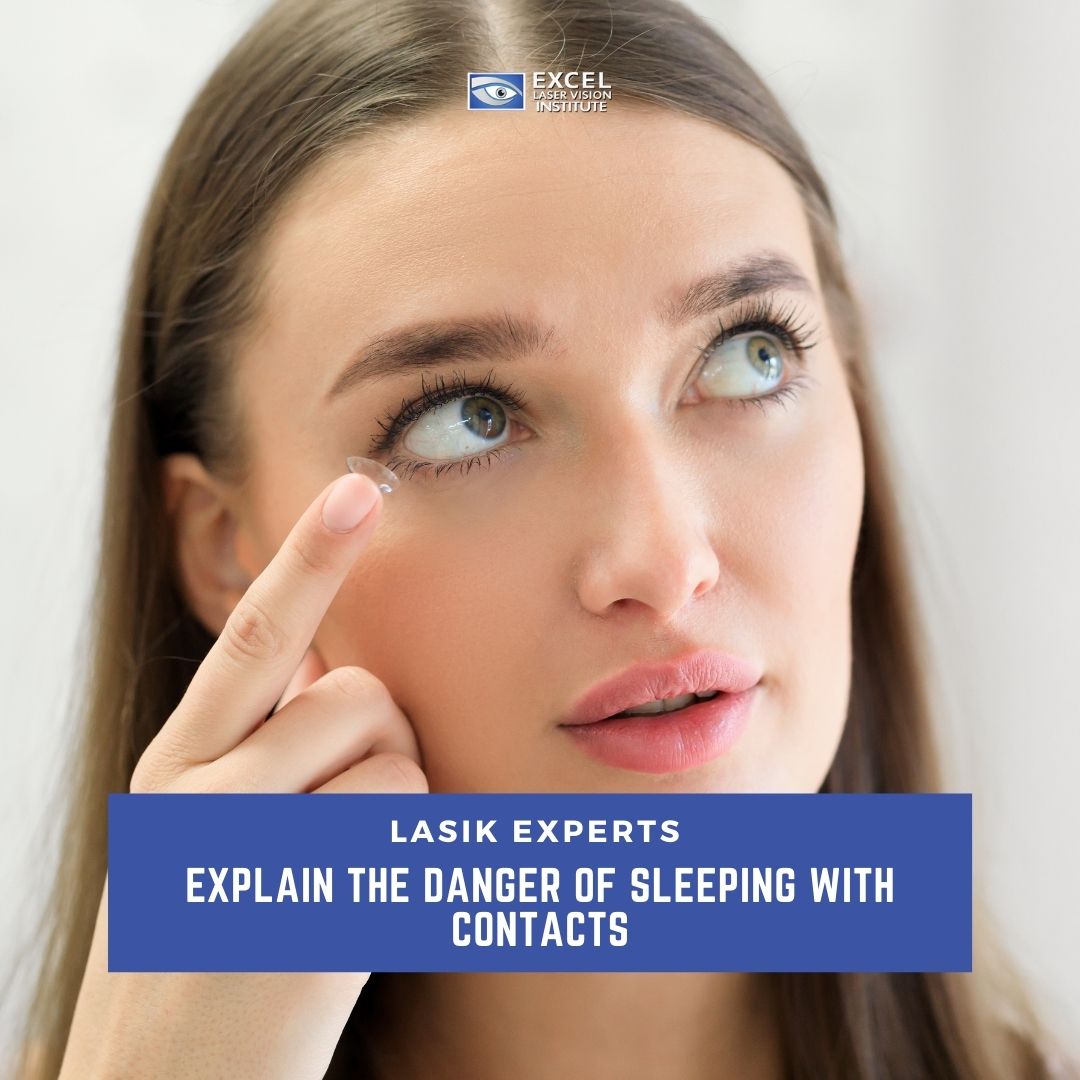
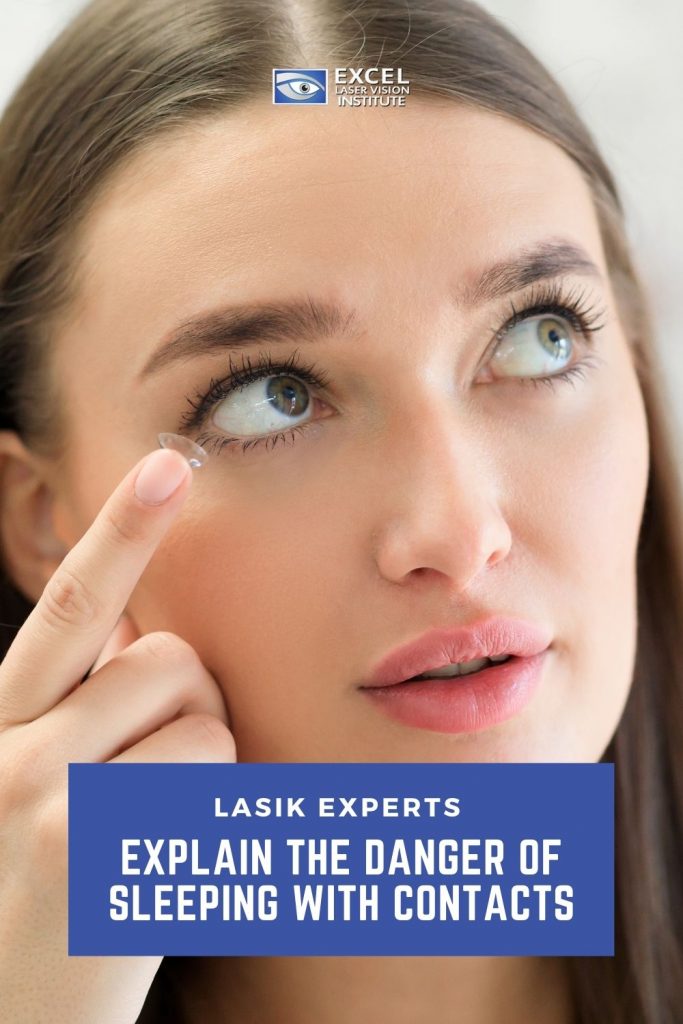
LASIK Experts Explain the Danger of Sleeping with Contacts
Wearing contacts is a responsibility. Like glasses, they can be expensive to obtain. Then, you have to make sure that they don’t get lost or damaged, are regularly cleaned, and are taken out when you go to sleep. Contacts are not for low-maintenance people. In fact, the inconvenience of contact lenses is what pushes many people to look into LASIK eye surgery. LASIK experts like Doctor Moosa say that wearing contacts actually increases your risk of developing harmful eye conditions, especially when forgetting to take them out at night. Below, we will delve into the science of sleeping with contacts and some helpful tips for those who are using these corrective lenses for the time being.
Oxygen Restriction
Our eyes, like other parts of our body, require oxygen to function. When they are open, they can receive a necessary supply from the air around us. However, contact lenses can block this process from happening. This means that contact users have a greater chance of developing inflammation, redness, irritation, fungal infections, bacterial infections, and corneal ulcers. This risk increases when contact users go to sleep without giving their eyes a break. Closed eyes will already receive less oxygen and, coupled with the barrier of contacts, this can cause serious issues and may even lead to impaired vision.
Pink Eye
Dr. Moosa, a Harvard-trained surgeon at a LASIK eye center in Los Angeles, Excel Laser Vision Institute, says that pink eye is a common problem amongst contact users. Anyone who falls asleep with their contacts on has a chance of developing conjunctivitis or another type of eye infection. Why is this? Studies have shown that our corneas are more susceptible to microscopic tears when wearing contacts for an extended period with our eyes closed. These mini tears can introduce fungi and bacteria into the eye.
Eye Ulcer
If you’re wondering why so many people are trading in their contacts for laser eye surgery, then let us introduce to you, corneal ulcers. Another risk of sleeping with contacts is developing an ulcer in your eye. This condition is actually one of the leading causes of blindness. Corneal ulcers are microscopic open wounds that festers when blocked from oxygen. If ulcers are not treated in a timely manner, they can cause lifelong damage to a patient’s vision.
Red Eye
Contact Lens Acute Red Eye (CLARE), otherwise known as Tight Lens Syndrome or Contact Lens Overwear Syndrome, is a common condition that people experience when they sleep with contacts. Symptoms of this include redness, tearing, decreased vision, and light sensitivity. If this condition persists, contact users may experience worse symptoms and potentially suffer vision loss.
Preventing Contact-Related Infections
The best way to prevent infections from contacts is to opt for another eye correction solution. LASIK, PRK, SMILE, and other refractive surgeries can help many people achieve 20/20 vision without the need of contacts or glasses. So, if you’re interested in replacing your contact lenses with clear, independent vision, then get LASIK from Excel Laser Vision Institute. Until then, here are some helpful tips for contact users:
- Avoid rubbing your eyes
- Always wash your hands before inserting or removing contacts
- Never reuse disposable contacts
- Remove contacts before swimming
- Remove contacts before sleeping or napping
- Never share contacts with anyone else
- Avoid costume contacts

LASIK Experts Discuss What Foods Impact Your Eye Health
The food that we chose to put in our bodies can greatly affect how we feel. Why is this? Food is fuel. If we eat unhealthy meals, then we are giving ourselves bad fuel, which in turn can lead to health problems down the road. Conversely, good food can make our bodies operate at its highest capacity. According to Doctor Moosa, one of the top LASIK professionals in Los Angeles, there are many types of food that can impact our eye health in particular.

Here are some of the best foods to eat for ocular health:
Berries
The best LASIK surgeons in Los Angeles say that berries contain high levels of antioxidants and vitamin C! This means that they are a great food to incorporate in your diet for healthy eyes. Blackberries and raspberries are especially high in these nutrients. If you’re eager to add more fruit into your diet, then you may also want to try more grapefruit and oranges, which also offer vitamin C and antioxidants.
Corn
While sometimes debated for its health benefits, corn has actually been found to have high levels of lutein and zeaxanthin. These are macular pigments that act as a natural shield from harmful sun rays. With more lutein and zeaxanthin in your diet, you decrease your risk for developing eye problems like cataracts.
Eggs
LASIK surgeons in Los Angeles particularly Doctor Moosa vow by eggs for eye health. Why? While they provide lutein and zeaxanthin, the yolks also have high levels of zinc. By eating more eggs, you can help fight against macular degeneration. And, after all, breakfast is the most important meal of the day!
Leafy Greens
Brussel sprouts, broccoli, and kale…oh my! Green vegetables are great for your eyes. Whether it’s a handful of spinach in your smoothie or some chard in your sandwich, you can incorporate these veggies in many ways. Green vegetables are known for their high levels of lutein and zeaxanthin. The more vegetables you eat, the better chance you have for increasing your ocular health.
Legumes
If you ask a LASIK expert in Los Angeles how to help your retinal health, then they may recommend legumes! Everything from lentils to black-eyed peas to kidney beans contain bioflavonoids and zinc. These ingredients protect your retina, which can lower your chances for health problems in the future.
Salmon
The key to eye health is omega-3 fatty acids. There are a variety of food options that provide this, but salmon is at the top of the list. Salmon is a healthy and light protein that can provide those omega-3s, which protect your blood vessels.
Turkey
Last, but certainly not least, is turkey! If you’ve always been a fan of Thanksgiving, then you’ll be happy to hear that turkey has lots of zinc, niacin, and vitamin B! These ingredients can help protect your eyes from developing cataracts.
Conclusion
Now that you know what foods promote good eye health, you can tackle your next meal with confidence. Foods that are not conducive to ocular health include fried food, margarine, and sugary drinks. Swap out your unhealthy choices for something more nutritious and enjoy your healthy eyes.
What to Know Before Getting in the Water After LASIK
It’s almost summertime, which means that many people are already making beach-day and pool-day plans. There’s nothing like a dip in the water to cool you down. If you’ve recently had LASIK eye surgery, then you may be wondering how this will affect your summer plans. LASIK experts in Los Angeles particularly Doctor Moosa are here to answer all your post-surgery questions and let you know the best way to protect your eyes while you’re enjoying the sunshine.

One of the reasons that people get corrective eye surgery is because it allows them to do certain physical activities more freely. Swimming, for example, can be a pain with glasses or contacts. Either you have to swim blindly, with your glasses on the side of the pool, or you run the risk of losing your contacts in the water and developing an eye infection from bacteria and chemicals. Once patients receive laser eye surgery, they are liberated from this summertime struggle.
The best way to approach your life, post-LASIK, is to follow the instructions given by your LASIK surgeon. They know the status of your eyes better than anyone and will evaluate their healing process in order to give informed opinions about how careful you should be. Predictably, you might need to wait a little before you can enjoy certain activities in order to avoid irritating your eyes while they are in the stages of healing. Here are some general guidelines that you may hear from your doctor after getting laser vision correction in Los Angeles:
- After One Week: The corneal incision is likely still recovering. LASIK patients should stay away from pools to avoid developing an infection.
- After 2-3 Weeks: By now, the corneal incision has likely closed up. However, it is still a good idea to avoid any activities that require water submersion (lakes, pools, hot tubs, etc.).
- After One Month: At this point, doctors will typically allow patients to swim again. However, they will suggest wearing goggles and not opening eyes underwater.
Beyond this, LASIK surgeons recommend always wearing sun protection when spending an extended period of time outside. Whether or not it is a sunny day, sun exposure can have a damaging effect on eyes. Sunglasses should have 100% protection from UVA and UVB rays. LASIK experts also recommend wearing a wide-brimmed hat, along with glasses, to prevent any irritation or sunburns.
Summertime is the perfect time to enjoy your crystal clear vision from LASIK. So, make sure to follow the recovery steps and exercise caution in order to preserve the work of the surgery. LASIK professionals recommend drinking plenty of water in order to offset any dry eye symptoms. This will support the eye’s tear ducts and prevent extreme irritation. Eye drops may also be prescribed to help alleviate any discomfort. Use your drops every day as directed by your surgeon.
You may need to wait a little bit before enjoying your cold plunges into the pool, but it will all be worth it! Before you know it, you will be splashing away the summer days. To learn more about LASIK recovery or to determine if you are a LASIK candidate, contact Excel Laser Vision Institute at (888) 363-1583.