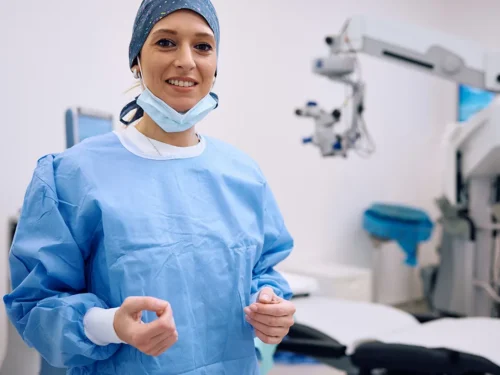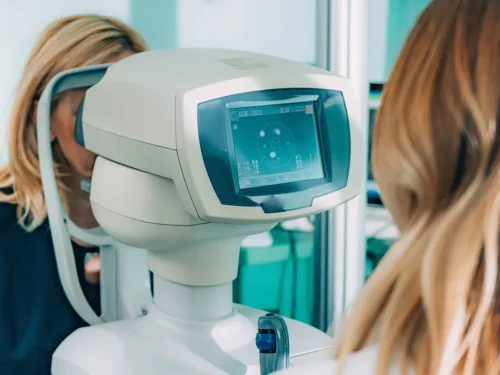



Choosing between SMILE vs PRK laser eye surgery is more than a medical decision; it’s a courageous leap toward seeing the world without the blur of refractive errors or the inconvenience of glasses or contacts. For active professionals and outdoor enthusiasts across Los Angeles and Orange County, these advanced laser vision correction treatments provide the visual freedom your lifestyle demands. While both procedures deliver exceptional results, they differ in their surgical techniques, suitability for various eye conditions, and recovery experiences. At Excel Laser Vision Institute, Harvard-trained Dr. Moosa helps patients understand which option aligns best with their lifestyle and vision goals, so you can feel confident and informed in your next step.
How Do the Surgical Techniques Differ Between SMILE and PRK?
1. How Does SMILE Work?
Small Incision Lenticule Extraction (SMILE) uses the advanced VisuMax® femtosecond laser system to create a precise, lens-shaped piece of tissue (lenticule) within your cornea. Dr. Moosa then carefully extracts it through an ultra-small 3mm incision, which preserves significantly more corneal nerves than traditional laser eye surgery procedures, helping to maintain optimal eye moisture and comfort while keeping the corneal surface intact. The laser is active for only 20-30 seconds per eye, and the whole procedure is about 30 minutes. Patients consistently report the experience as comfortable, describing only gentle pressure sensations without heat or cold during treatment that Dr. Moosa ensures remains stress-free.
2. How Does PRK Laser Eye Surgery Work?
Photorefractive Keratectomy (PRK) removes the cornea’s thin outer layer (epithelilium) using either a diluted alcohol solution, rotary brush, or laser, exposing the tissue beneath. Using the advanced WaveLight EX500 excimer laser system, Dr. Moosa then precisely sculpts the exposed tissue to correct your refractive error. Over the course of 3-5 days, your epithelium regenerates naturally, creating a more stable and durable corneal structure. The laser is active for 30 to 60 seconds per eye, and the procedure lasts about 30 minutes. You may experience mild stinging, but this is quickly alleviated with cooling drops.
Main Difference? SMILE preserves the corneal surface, whereas PRK temporarily removes and regenerates the protective layer for comprehensive treatment access.
What Should You Expect From Laser Eye Surgery Recovery?
Having a general idea of how the healing process goes for SMILE vs PRK can help you prepare practically and emotionally for the weeks ahead, especially as you return to your active Southern California lifestyle.
SMILE Recovery Timeline
1. Days 1-2: You’ll notice rapid improvement with no real downtime – patients can function normally that same day. You can return to your daily routine and work within 24 hours, often feeling confident enough to drive. Light sensitivity remains minimal, with any discomfort resembling an eyelash sensation.
2. Week 1: Your vision continues to sharpen, allowing you to return to reading, computer work, and light exercise by the end of the week. Mild visual fluctuations are normal as your eyes fine-tune to optimal clarity.
3. Weeks 2-6: Stable, clear vision develops with minimal daily life disruption. Gradual return to all activities, including swimming and contact sports, typically occurs within 2-4 weeks.
PRK Recovery Timeline
1. Days 1-5: The initial healing phase requires dedicated rest and adherence to Dr. Moosa’s personalized recovery protocol. Dr. Moosa places a protective contact lens bandage to ensure optimal healing while your vision gradually clears. While discomfort peaks on day 2, with manageable irritation and stinging sensations, these symptoms are well-controlled with prescribed medications. Normal functioning typically begins on day 4 for most patients, though you should avoid screens, bright lights, and work for the full 3-5 day critical healing period.
2. Weeks 1-2: This is the turning point where vision clarity begins to emerge daily, and the protective lens can be removed around day 4-5. You can return to work and light activities, though screen time may cause fatigue.
3. Months 1-6: You’ll see continued vision improvement over the next several months, with specialized eyedrops supporting your healing. Full stabilization requires 3-6 months.
TL;DR: SMILE offers a quicker return to visual clarity and your busy Los Angeles and Orange County lifestyle, while PRK requires approximately 1 week of focused recovery time and follows a gradual path to final results.
Which Eye Conditions Are Best Suited for Each Procedure?
SMILE is an excellent choice for those 22+ with active lifestyles who want to get back to their busy lives, those worried about dry eye discomfort, or those looking for a minimally invasive approach to laser vision correction.
- SMILE treats nearsightedness from -1 to -10 diopters and astigmatism up to 3 diopters, as long as you have healthy corneas with a good thickness (500 microns minimum) and a prescription that’s been stable for 1 year.
- Not a right fit for farsightedness, complex corneal shapes, or thinner corneas, or those with keratoconus or severe dry eye. Not suitable for those with unmanaged diabetes or if you’re pregnant/nursing.
PRK is an excellent choice for those 18+ who require maximum corneal stability, including military personnel, professional athletes, or those whose careers involve potential eye trauma risk. This time-proven laser vision correction approach offers exceptional safety for patients who prefer comprehensive corneal healing or those seeking optimal long-term visual outcomes through Dr. Moosa’s expert surgical technique.
- PRK treats higher prescriptions of nearsightedness (up to -12 diopters), farsightedness (up to +6 diopters), or astigmatism (around 4 diopters), with unique corneal shapes or thinner corneas that require specialized care.
- Not a right fit if you have severe dry eye, poor healing ability, keratoconus, advanced glaucoma, or macular degeneration. Not suitable if you have chronic inflammation, active eye infections, or are pregnant/nursing.
Bottom Line: SMILE works best for straightforward nearsightedness and astigmatism cases with healthy, thick corneas, while PRK addresses complex refractive errors, unique corneal profiles, and high-impact lifestyles—both delivering exceptional results when matched to appropriate candidates through Dr. Moosa’s comprehensive evaluation at Excel Laser Vision Institute.
Your Exceptional Vision is Just a Phone Call Away
Every patient brings a unique story to our practice, and we believe the best vision correction outcomes come from truly understanding your individual needs, lifestyle, and eye characteristics. Whether you’re drawn to SMILE’s rapid recovery or PRK’s proven versatility, Dr. Moosa and our experienced team can get you on the path to clear, comfortable vision.
If you’re in Brea or Los Angeles and think you might be a candidate for SMILE or PRK laser eye surgery, contact us today. Dr. Moosa offers multiple advanced vision correction options that could give you the visual freedom to fully enjoy your active Southern California lifestyle. Ready to discover which option is right for you? Call (310) 905-8622 or schedule your free consultation to take the first step toward visual freedom.
References
- Burris TE, Baker PC, Ayer CT, et al. Photorefractive Keratectomy. StatPearls – NCBI Bookshelf. Updated July 18, 2023. Available at: https://www.ncbi.nlm.nih.gov/books/NBK549887/
- Chan WK, Hunt KE, Goh VH, et al. Photorefractive keratectomy for myopia of 6 to 12 diopters. PubMed. 1995. Available at: https://pubmed.ncbi.nlm.nih.gov/7553109/
- Gianoli F, Cuffaro E, Torroni G, et al. Smile – the next generation of laser vision correction. PMC. 2017. Available at: https://www.ncbi.nlm.nih.gov/pmc/articles/PMC5712922/
- Moshirfar M, Bundogdu I, Rigby J, et al. Small Incision Lenticule Extraction. StatPearls – NCBI Bookshelf. Updated February 26, 2024. Available at: https://www.ncbi.nlm.nih.gov/books/NBK549896/
- Wong AHY, Cheung RKY, Kua WN, et al. Dry Eyes After SMILE. Asia Pac J Ophthalmol. 2019. Available at: https://pmc.ncbi.nlm.nih.gov/articles/PMC6784859/